Salt Lake Sector V, Bidhan Nagar,
Kolkata, West Bengal India Pin - 700091
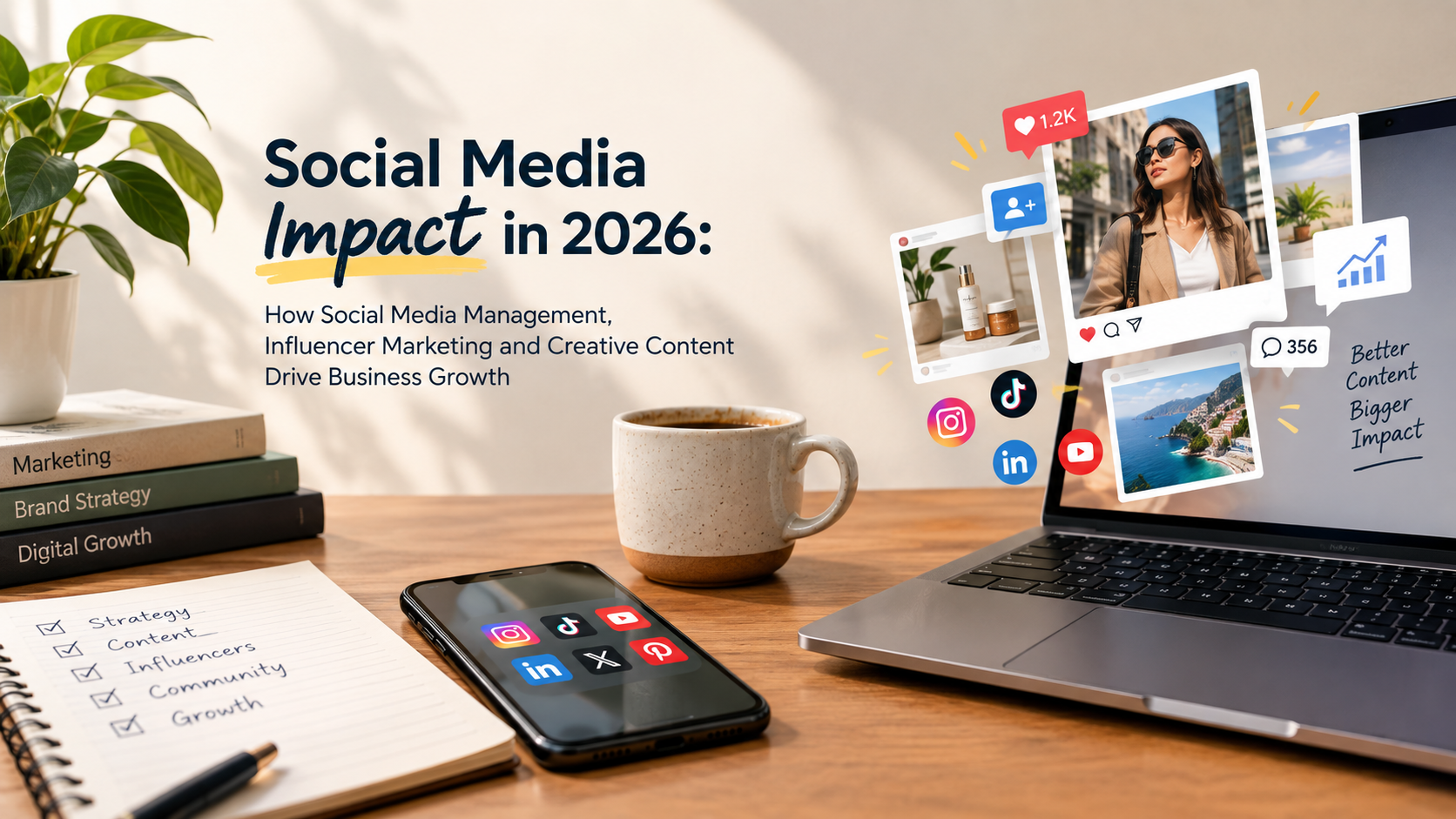
In simple terms, social media impact is what actually happens after a person sees your brand online and decides, almost without noticing they’re deciding, whether you’re worth their time. It’s mostly built through active social media presence, honest influencer relationships, a community engagement, and creative work that looks like it was made by people who care.
Most businesses still hire for this in pieces. A designer here, a social manager there, an influencer campaign whenever the budget allows it. That patchwork approach is exactly why so many brands post every day and still feel like nobody’s home. The moment posting, influence, community and design start pulling in one direction, growth stops being a slot machine and starts becoming something you can actually build on.
So if your page has followers who never message you, or a scrappier competitor with a shaky logo somehow gets tagged in every conversation about your industry, keep reading. There’s usually a very ordinary reason behind both problems.
Nobody discovers a business through a single channel anymore. Some customers find your brand while scrolling a trending reel, maybe seeing an influencer they trust promoting your products, maybe some customer just find your social media content honest enough that they decide to trust your brand. Treating each of those moments as a separate marketing task, handled by a separate person with a separate brief, is where most of the impact leaks out.
Business social media management keeps a brand active and coherent instead of dull and scattered. Creating a community is what matters in today’s world as good community management social media turns a crowd of scrollers into people who actually reply, defend and refer to your brand and services. Creative work, including the graphic design services and the logo, gives a brand a face people recognise before they’ve read a word. Online reputation management services stitch the whole thing together by making sure the internet’s version of the brand matches the brand’s own version of itself.
None of this works as a checklist. It works as a system, built around where a brand’s real customers actually spend their time, not where the agency finds it easiest to post.
Let’s take a moment to think back to the last time you followed a business you’d never bought from before.
You most probably were scrolling on social media when you came across a post or a reel which stopped your thumb. Maybe it was funny, maybe it was oddly specific, maybe it just looked good. You checked the profile and the highlights, noticed if the brand actually replies to comments , and maybe took your time to check if a creator you already follow had posted about it too. If you were seriously thinking about buying, you probably searched the name in the search bar just to see what other people are saying about this brand.
At no point were you thinking about content calendars, engagement rates or brand guidelines. You were doing something much simpler: deciding whether this business felt alive, honest and worth trusting with your hard earned money.
That’s the entire premise of this article.
Most companies still build their online presence department by department. The design team makes whatever looks good that week. The social manager posts on a schedule someone drew up months ago and never revisited. Influencer outreach happens once, usually when there’s leftover budget near quarter end. Comments get answered by whoever happens to be free, if anyone is. Each piece might be fine on its own. But the customer never sees five departments. They see one business, and it either hangs together or it doesn’t.
When it doesn’t, the seams show fast. The website logo looks nothing like the Instagram one. The influencer’s tone has nothing to do with the brand’s actual voice.”Maybe a customer with a bad delivery experience left a complaint in the comments, and it’s still sitting there unanswered while three new posts have gone up since.
Social media impact is what all of that adds up to: the real, cumulative effect of everything a brand does across its channels, its creative output, its influencer relationships and its public reputation, measured not in likes but in how many strangers actually end up trusting it enough to actually become your customer.
Paid reach is rented. The day the budget stops, so does the visibility. Social media impact, the earned kind, is owned. A strong logo, a community that actually likes you, a creator relationship built on something real, these keep working long after the algorithm has forgotten your last post ever existed.
Platforms have gotten a lot more conversational and a lot less obsessed with a tidy chronological feed.
People find brands through recommendation algorithms now, through creators they already follow and trust, through comment sections that turn into actual debates, and increasingly through AI search tools that summarise what strangers on the internet are already saying before anyone visits a single profile. Instagram, YouTube Shorts, TikTok, even LinkedIn, have all shifted toward surfacing content to people who’ve never followed the account in question.
The truth is that people are more aware than they have ever been.The way people search and buy things has changed a lot. Nobody types a brand name into a search bar and stops there anymore. They ask a fuller, more skeptical question: does this brand actually deliver, does that influencer genuinely use the product, is this the real deal or just another ad.
Because of that shift, how consistently a brand shows up across its own posts, its influencer content, its community replies and its public reviews now genuinely affects whether a stranger feels comfortable trusting it at all.
A workable strategy tends to sit on five legs.
Business social media management keeps the presence steady. Influencer marketing borrows trust an audience already has. Community management turns that audience into people who actually participate. Creative content gives the brand a face people remember without needing to read the caption. Reputation management makes sure the rest of the internet agrees with the story the brand is telling about itself.
The five labels aren’t really the point.
What happens when they stop working in isolation is.
Ask most people what social media management means and you’ll get some version of “posting pictures and answering the odd comment.”
Fair, but that’s the tip of it.
Long before anyone should be hoping a single reel goes viral, a brand needs a foundation that’s active, consistent, and actually sounds like the business it represents. A page that posts in bursts, ignores messages for a week, and shifts personality across three different platforms will struggle no matter how strong any individual piece of content happens to be.
Take a brand that spends real money on a beautifully shot product video, then drops it onto a page that hasn’t posted in six weeks, has a bio nobody’s updated since launch, and forty unanswered comments sitting under older posts like unopened mail.
The video isn’t the problem.
Everything underneath it is.
Business social media management covers platform strategy, calendars, cadence, captions, hashtag research, audience data, boosting decisions and reporting. But none of that exists to hit a quota. It exists to make the brand feel present, human and alive to whoever stumbles across it at 9pm on a Tuesday.
A decent marketing agency for social media exists precisely because algorithms shift constantly and competitors keep publishing, which means a strategy that worked in January can quietly stop working by June if nobody’s watching it.
Before scheduling another thirty posts, a business should first understand what’s already happening on its own channels.
That’s what a proper social media audit is for.
A good one doesn’t dump two hundred metrics on a spreadsheet and call it a day. If a report can’t tell you which five things actually deserve attention first, it hasn’t really helped anyone make a decision.
A better audit asks sharper questions. Does the brand voice actually sound the same across every platform, or does it change personality depending on which intern posted that day. Are the best performing posts being followed up on, or ignored in favour of whatever felt fun to make that week. Is the follower count growing with people who could never realistically buy anything. Are comments piling up unanswered underneath a feed that keeps getting busier anyway. Does the visual identity hold its own against the accounts the audience already follows, or does it quietly look like an afterthought.
Answer those honestly and the audit becomes a growth document instead of a guilt trip.
Content planning too often turns into a game of just filling the content calendar with as many posts ideas as possible without a second thought if it fits the brand overall aesthetics or voice.
That approach produces content that feels rushed.
A better place to start is understanding what each platform is actually good for and what its audience shows up expecting. Someone scrolling Reels wants something visually gripping in the first two seconds or they’re gone. Someone reading LinkedIn wants insight, or at least the appearance of it.
A real social media growth strategy respects those differences instead of cutting the same content five different ways and hoping nobody notices it doesn’t quite fit.
Not only the content but the captions, visuals, timing, tone and calls to action should fit the expectation of the platform they’re published to.
The goal isn’t a busy looking page.
It’s the right piece of content, on the right platform, for the right person scrolling past it.
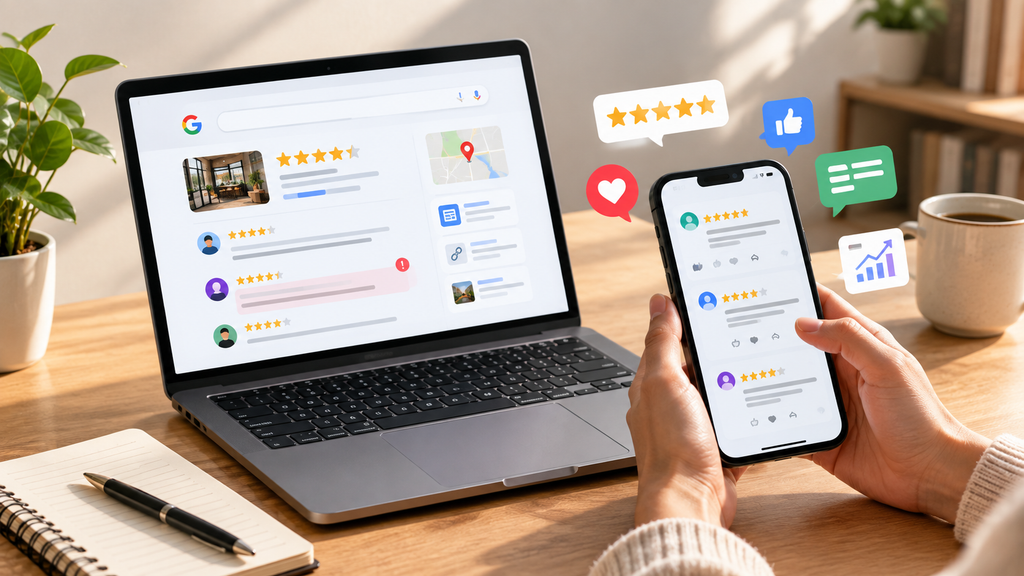
Reviews work because they quiet down a nervous customer’s doubts.
Two similar businesses charge similar prices for similar services. Both look professional online. One has a steady trickle of honest, recent feedback with visible replies from the brand itself. The other has almost nothing. Now there’s a real reason to pick one over the other, before either business has said a single word directly.
But chasing reviews purely to inflate a number misses the point entirely.
Ongoing reputation management is really just a habit: encourage honest feedback, reply to every mention whether it’s flattering or not, and track how sentiment moves over time, because consistency, speed and honesty all quietly decide how much a stranger is willing to trust you.
There’s a wide gap between paying someone to hold your product for a photo and actually building an influencer strategy to promote your brand.
A rushed campaign asks a creator to post once and hopes for the best.
A real strategy asks a different question first: who does our audience already believe, and what can that person say about us that we could never convincingly say ourselves.
That single shift changes everything, from who gets picked to how the brief gets written.
Instagram influencer marketing works because it borrows a relationship that already exists instead of trying to build trust from scratch. A decent influencer marketing company knows audience overlap matters far more than follower count, and that a smaller creator with a genuinely engaged niche following will usually outperform a much bigger account whose audience scrolls past sponsored posts without a flicker of interest.
If a viewer can tell within three seconds that the creator has never actually used the product, the production budget was wasted. Worse, trust just took a hit it didn’t need to take.
Which is why a solid social influencer marketing agency builds this around real audience research, genuine relationships and honest briefs, rather than treating every influencer post like a vending machine transaction.
Here’s the real difference between churning out content and actually having a creative strategy.
A business decides it needs ten posts a month. Then twenty. Then thirty.
None of that tells you whether anyone actually remembers the brand afterward.
The better question is what each visual is supposed to say about the brand before anyone reads a single word of the caption.
A strong creative approach starts with identity. What colours, fonts, tone and style should people associate with this business, even with the logo cropped clean out of frame. What makes this brand look like itself instead of a slightly cheaper version of the competitor two scrolls up.
Chase those questions and you get better work than copying whichever visual trend happened to trend that week.
Someone’s shopping around for a creative partner.
They might ask what actually makes a brand’s visuals feel consistent.
Then, how does a logo hold up shrunk to a tiny profile picture, blown up on a storefront sign, and printed on a shipping label without losing its shape or meaning.
Also ,why do some brands look expensive on a modest budget while others, spending twice as much, still look thrown together.
And , what a small business should realistically budget for design that holds up for the next five years, not five weeks.
Different questions, different stages of the decision, and a design partner worth hiring should have real answers to all of them, not just one polished mockup and a goodbye email.
The best graphic design services aren’t judged by how good one graphic looks sitting alone in a portfolio. They’re judged by how well that same visual language survives being stretched across dozens of formats and platforms without falling apart. It’s exactly why growing businesses actively search for graphic design services India, wanting a team that understands both global design standards and the local market their actual customers live in.
A logo is usually the smallest thing a business owns, and it’s asked to do the most work of anything in the brand.
It has to survive as a tiny profile picture, a giant storefront sign, a watermark buried in the corner of a video, and a stamp on an invoice, all without losing what it’s supposed to mean.
A thoughtful logo design service doesn’t open a design tool and start playing with fonts. It starts by figuring out what the business actually stands for, who it’s trying to reach, and how it wants to be remembered five years from now, well after whatever’s trending today has been forgotten. This means choosing colors that best represent the brand’s identity and using fonts that feel closest to its aesthetic.
A real social media growth strategy decides what gets made, in what order, and around which real audience behaviours, so the output builds into something recognisable instead of a pile of unrelated posts that just happen to share the same handle.
B2B buying on social media rarely looks like someone seeing a post and immediately reaching for their wallet.
A marketing manager might follow a page for months before ever engaging with it. A founder might quietly compare three agencies by scrolling through their case studies and reading how they respond to blunt comments. A finance person might size up credibility purely by watching how professionally a company handles public criticism. Someone else on the buying committee might just want proof this actually worked for a business that looks like theirs.
So B2B content has to do more than farm likes.
Case study carousels, behind the scenes process shots, a founder willing to say something real, client testimonials, sharp industry commentary and honest breakdowns of past projects help different people on the buying side understand both the problem and whether this company can actually solve it.
The best B2B content never reads like a pitch wearing a caption as a disguise.
It reads like the company already started helping before the sales call was even booked.
Community management on social media raises a question that barely existed a few years back. What happens in the comments, the DMs and the shares after a post goes live, and who’s actually responsible for making sure that feels human instead of automated.
This is where community management stops being an afterthought tacked onto the job description and starts being an actual growth lever.
A word of caution here, though.
There’s no trick that makes a comments section feel warm overnight. It gets earned, slowly, through consistent, honest back and forth.
The fundamentals that have always mattered still do: reply promptly, sound like an actual person rather than a script pulled from a template folder, and acknowledge praise and criticism both, in public, rather than only the praise. No new feature or automation tool replaces that groundwork.
So the smarter move isn’t chasing some flashy automated system.
It’s making the actual back and forth stronger.
Community management is about making a brand’s presence feel responsive, welcoming and consistent to the people already following it.
Making people feel heard, specifically.
A company posts confidently about its values on the main feed, then takes three days to answer a simple pricing question in the comments and never replies to DMs at all. There’s a gap between what the brand claims to stand for and how it behaves the moment someone actually reaches out.
A modern strategy cares about the boring stuff that actually matters. How fast the brand replies. How human those replies sound. Whether criticism gets handled openly instead of quietly deleted. Whether the community gets acknowledged consistently, not just tolerated when convenient.
That consistency matters to the existing audience first. It also builds a far more trustworthy first impression for anyone brand new who happens to land there.
Social media management, influencer marketing and community management get pitched as competing line items on a budget sheet.
But they make far more sense as layers stacked on top of each other.
| Approach | Main Purpose | Typical Audience Behaviour |
| Social Media Management | Consistent visibility and brand presence | Follows, scrolls, occasionally engages |
| Influencer Marketing | Borrowed trust and audience reach | Trusts a familiar creator’s recommendation |
| Community Management | Relationship depth and loyalty | Comments, messages, defends and refers the brand |
Management builds the foundation by keeping a brand visible and recognisable. Influencer marketing extends that visibility into audiences who already trust someone else. Community management turns visibility into a relationship that outlasts any single campaign.
A business doesn’t need three separate teams working in three separate universes for every post.
A well planned campaign can carry all three at once. A well designed product reel can be strong enough for the brand’s own feed, compelling enough that a creator genuinely wants to share it, and warm enough in tone that the comments underneath actually feel worth replying to.
That beats treating reach, trust and loyalty as three unrelated projects competing for the same afternoon.

This is where social media impact stops being a collection of services and starts being a system.
Take a brand launching a new product.
It builds a strong visual identity for the launch, backed by the best graphic design services and a logo refresh that ties everything together. It runs a short content series answering the questions customers usually ask before buying anything like this. That same launch becomes a small influencer campaign, with creators who genuinely fit the brand talking about it in their own words, not a script handed to them the night before.
The community team is briefed ahead of time so every comment and message during launch week gets a fast, human reply. Reputation management keeps an eye on the early reviews and public chatter, catching concerns before they snowball into something bigger. The visual identity stays the same everywhere, from the creator’s story to the brand’s own grid.
Now look at what the customer actually experienced.
They discovered the product through a creator they already followed, checked the brand’s own page, skimmed a few comments, noticed how the brand handled a bit of pushback, searched the name, and then decided to buy.
They saw one business, showing up consistently and honestly, through the entire process.
That’s the real value here. Not “our post went viral for a day.” More like, “people can find us in five different places and every single one tells them the same true story.”
At Digiprism, we treat social media impact as a connected system, not a list of deliverables checked off one by one.
And finally, Improve.
We look at what actually moved the business forward, learn from it, and adjust the system.
Discover, Understand, Design, Engage, Partner, Protect, Convert, Improve.
It’s worth remembering that this never really finishes. Platforms change. Algorithms change. Audiences change. Competitors change. The system has to keep learning, on purpose, not by accident.
One of the most common traps is followers without any real business to show for them. A page can rack up thousands of followers and still barely generate an inquiry if the people following it never had anything to do with the actual customer base. More followers won’t fix a mismatch problem. It just makes it louder.
Another trap is posting for the sake of the calendar. A weekly posting target keeps a team consistent, sure, but publishing five reels because the sheet says five isn’t a strategy. Every post that matters should have a job to do, whether that’s answering a real question, showing off a product properly, reinforcing the visual identity, or nudging someone one step closer to buying.
Plenty of businesses treat influencer marketing as a single transaction instead of a relationship. The collaboration itself matters less than whether the creator’s actual audience overlaps with real customers, and whether the whole thing feels honest enough that people actually believe it.
Community management has a similar failure mode. Replying occasionally isn’t the same as building trust. A business can post like clockwork every week and still never earn loyalty if messages sit for days or criticism quietly vanishes instead of getting a real response.
And then there’s the temptation to treat a rebrand as a shortcut. It isn’t one. If the actual customer experience is inconsistent, the community gets ignored, and the brand looks and sounds different on every platform, a shiny new logo won’t fix any of that underneath.
Follower counts are nice to look at.
Likes feel good for about a minute.
Neither tells you the full story.
A better measurement model tracks the journey from visibility all the way through to actual business impact.
For management, that means reach, engagement quality, follower growth that’s actually relevant, click throughs, and enquiries that came directly through the page. For influencer work, it means audience overlap, real engagement on the sponsored content, referral traffic, and whether the partnership produced trackable enquiries rather than just a nice looking view count.
And in community management, comment counts are only half the picture. Response time, sentiment, repeat engagement from the same people, and how often the community shares content unprompted tell you far more about whether loyalty is actually being built.
Creative content deserves the same scrutiny. A visual system that consistently gets recognised across platforms can be worth more, long term, than one viral post that pulled in twenty thousand views from people who never had any real connection to the business.
Reputation is getting more measurable too. Tracking review sentiment, response times and how consistently the brand shows up across search results and public mentions gives a business a much clearer read on where it actually stands.
The principle stays simple. Don’t measure how much got posted. Measure what actually changed because of it.
Almost any business that depends on being found and trusted online can benefit from a real social strategy, but the shape of that strategy should change with the business.
A small local business probably needs to lean hard on business social media management, online reputation management services, community management and steady local engagement. Which is exactly why so many small businesses go looking for a social media marketing agency for small businesses that actually understands their specific market rather than pasting on a generic national template.
An ecommerce brand probably needs stronger creative content, influencer partnerships, consistent product storytelling and community management built for conversion.
A B2B company probably gets more out of thought leadership, founder led posting, case studies and content built for a longer, more considered buying process.
A startup probably needs to balance early brand identity work with category education, creative content and community building from day one.
A personal brand probably combines consistent posting, a strong visual identity and honest influencer relationships to build credibility inside a specific niche.
There isn’t one social strategy every business should be copying.
The right one starts with the business, the audience, and what the business actually needs to happen commercially.
Organic growth and paid promotion don’t have to fight each other for the same budget.
Paid campaigns bring quick visibility, let a brand test new creative fast, and reach specific audience segments on demand. Organic social media impact builds the slower stuff, recognition, loyalty, reusable brand assets that keep earning long after a campaign has ended and the ad spend has stopped.
The two also feed each other, if anyone bothers to notice.
A paid campaign might reveal which visual style or message actually converts. That insight can shape the organic calendar, the influencer briefs, the whole creative direction. Meanwhile, an organic post that keeps generating real engagement on its own might flag a theme worth throwing paid budget behind.
So it’s rarely a straight choice between organic and paid.
More often the stronger move is organic community building, honest influencer relationships and paid promotion, all pulling together as one system instead of three separate bets.
Social media impact is the build up of real visibility, engagement, brand trust and business opportunity that comes from social media management, influencer marketing, community management, creative content and online reputation, working together rather than separately.
Yes. A consistent, well run presence is still the foundation for getting a brand discovered, recognised and trusted.
It’s collaborating with creators whose audience already trusts them, so that trust can genuinely extend to the brand being featured, provided the partnership feels real rather than forced.
They cover monitoring, shaping and responding to how a business shows up across reviews, search results and public mentions, so what people find matches what the brand is actually trying to say about itself.
Creative content, including the best graphic design services, gives a brand a visual identity people recognise instantly, before they’ve read a caption, which builds recognition and trust with every post after that.
The biggest shift underway isn’t one platform replacing another.
It’s that the customer’s path is getting more connected across creators, communities and public reputation all at once.
Someone discovers a business through a creator they already trust, checks the brand’s own page, reads a few comments, notices how the brand handled a bit of criticism, searches the name to see what else turns up, and only then decides to actually reach out.
Which means businesses need to stop treating social media as a stack of unrelated tasks handed to unrelated people.
Social media management isn’t just posting.
Influencer marketing isn’t just paying for a mention.
Community management isn’t just replying occasionally.
Creative content isn’t just making things look nice.
Online reputation isn’t something that only matters the day something goes wrong.
They’re different parts of the same discovery journey.
And the businesses that get that will have a genuine edge, not because they found one clever trend, but because they built a presence that holds together everywhere their actual customers already spend their time.
At Digiprism, we think the strongest social strategies are built on connected trust, not isolated campaigns that look impressive for a week and disappear.
That means designing an identity people actually recognise, and then making sure the brand behaves consistently with that identity every single time someone comments, messages or mentions it. It means making content that serves the audience instead of publishing purely to hit a weekly number. It means treating influencer marketing as a relationship rather than a transaction, using community management to build real loyalty, and keeping reputation consistent everywhere the brand shows up.
We’re not chasing every trend that trends for a week and vanishes.
We don’t think posting hundreds of reels automatically buys loyalty.
And we’d never sell a single influencer campaign as a guaranteed shortcut to trust, because it isn’t one.
The actual goal is simpler than any of that.
Build a presence that genuinely deserves to be followed.
When social media management, influencer marketing, community management, creative design and reputation work as one connected system, social media stops being just a place to post.
It becomes a growth engine that keeps running.
Social media impact isn’t a choice between social media management, influencer marketing, community management, creative content or reputation. It’s about connecting all of them so customers can discover, understand and trust your business at every stage of their own decision, not just the moment they happen to see one post.
Social media management keeps you visible.
Creative content and design make you memorable.
Instagram influencer marketing borrows trust that’s already there.
Community management turns followers into real relationships.
Online reputation management keeps the whole story consistent.
Put together, they build something worth more than reach on its own. A presence people can actually discover, understand and trust.
Your customers are already scrolling, comparing, watching creators, reading comments, and quietly deciding whether your business is worth their trust.
The job is making sure your brand shows up consistent, honest and well designed at the exact moments that decide it.
Social media management, influencer marketing, community management, creative content and online reputation, working as one.
When these pieces move together, social media impact stops being a vanity metric.
It becomes a real system for building recognition, trust and business growth.
Ready to Build Your Social Media Impact Engine?
Let’s Talk.
Turn ideas into growth with the right digital marketing strategy.
Let's Talk Growth