Salt Lake Sector V, Bidhan Nagar,
Kolkata, West Bengal India Pin - 700091
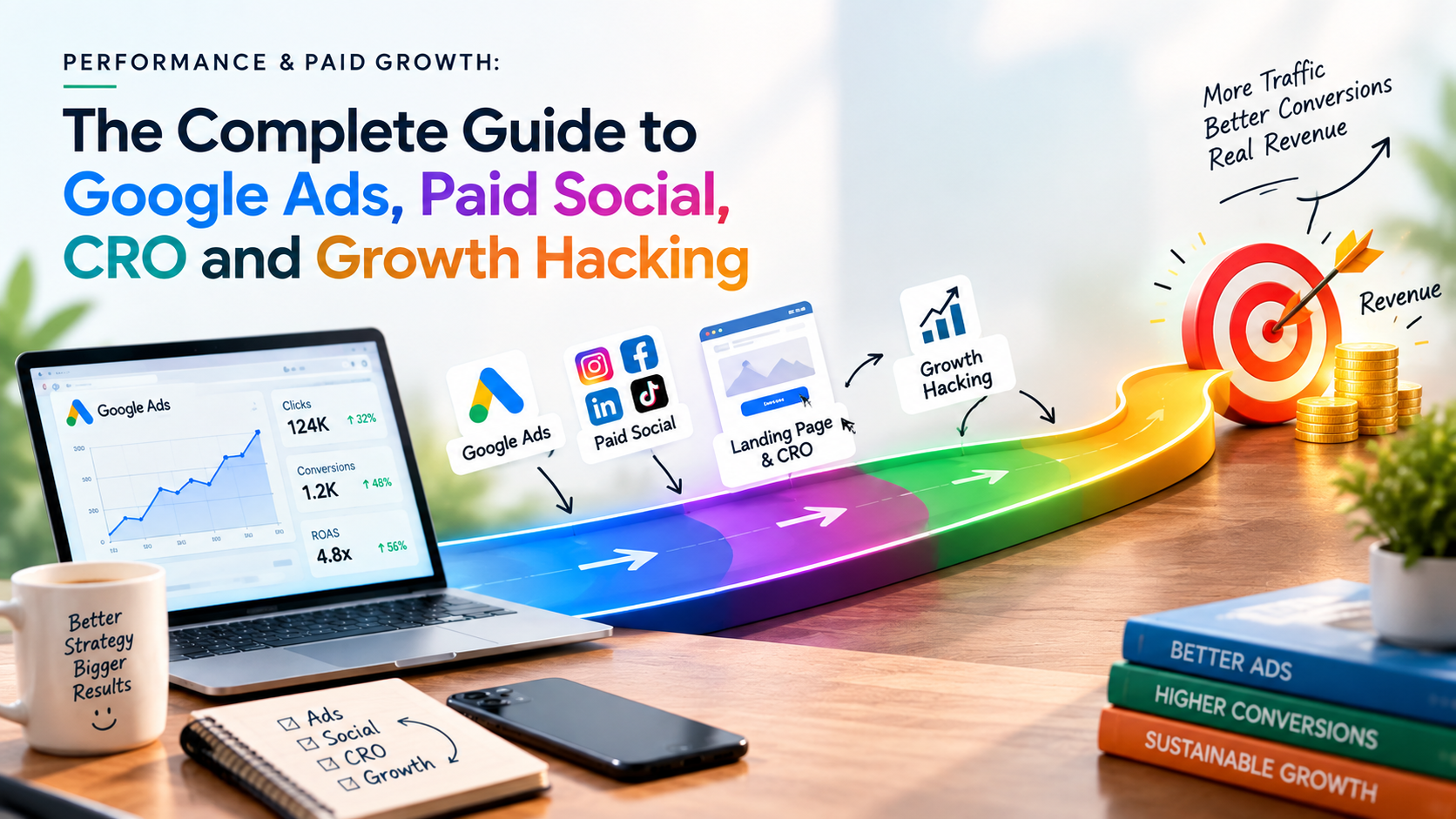
Performance and paid growth is what separates a business that treats ad spend like a monthly gamble from one that treats it like a machine it can measure, tune and trust.
It lives at the crossing point of media buying, landing page psychology, data and speed, and most businesses still hire for it in pieces. One person runs the ads. Someone else builds the website, usually months earlier and rarely revisited since. A third person glances at a dashboard once a month and calls that “optimization.” That split is exactly why so many campaigns pull in clicks that never turn into a single paying customer.
So if your cost per click has increased over the past year while revenue barely moved, or a scrappier competitor spending half your budget somehow converts twice as often, keep reading. Nine times out of ten there’s a fixable reason sitting somewhere in the gap between the ad and the checkout page.
Paid growth used to be simple, almost boring. Pick a handful of keywords, write an ad, wait for the phone to ring. That version of the job barely survives one auction cycle now. A real buyer today might see a Google ad on a Tuesday, ignore it completely, get retargeted on Instagram on Thursday, watch a founder talk through the product on LinkedIn the following week, click through, abandon the cart at the shipping page, and finally come back four days later because of a well timed email with ten percent off. Every one of those touchpoints is its own small decision, and each one either wins the sale or quietly loses it.
A solid google ads marketing agency builds the search layer that catches demand the second someone is actively looking, not a week after. It stretches that reach into the feeds people scroll through the rest of their day, often before they’ve consciously registered they even have the problem your product solves.
Conversion rate optimization turns the traffic that’s already showing up into buyers instead of a bounce rate nobody wants to talk about in the Monday meeting. Purchase funnel optimization makes sure nobody who genuinely wants to buy gets stuck somewhere between the click and the confirmation screen. Growth hacking techniques layer speed and constant small experiments on top of everything else, so the whole system gets sharper every week.
None of this is really about spending more money. It’s about spending on purpose, aimed at the right stage of someone’s decision, judged by what lands in the bank account rather than what looks impressive in a slide deck.
Here’s how most customers’ purchase process looks: you saw a brand’s reel about a product you were planning to buy, and you scrolled past it. Then maybe after a few reels you saw your favourite influencer also talking about that brand so you checked the brand’s social media account to check if it is legit or not, or if the price of the product is in your budget or not and all of this happened way before you were at the brand’s website to actually buy the product.
Nobody buying something is thinking about cost per acquisition, quality score or a seven day attribution window. They’re deciding, in a much simpler and blunter way, whether spending money right now, on this specific thing, from this specific business, feels safe enough to do.
That gap, between how marketers talk about ads in a meeting and how a real customer actually experiences them at eleven at night on their phone, is exactly where most budgets quietly leak away.
Plenty of businesses still run performance marketing as a set of disconnected chores. Someone builds Google Ads campaigns around whatever keyword tool shows the highest volume. The landing page hasn’t been touched since the site relaunched two years ago and stock images are still lying here and there, which feels odd. Nobody’s testing anything, because testing always sounds like a project for “later.”
Each piece can look fine sitting alone in its own report. But a customer never experiences five separate campaigns run by five separate people. They experience one buying journey, start to finish, and the moment any part of it feels disjointed or off, they simply close the tab.
Performance and paid growth is the return a business actually gets once media buying, creative, landing pages and data start moving in the same direction instead of sitting as five unrelated line items on an invoice.
It isn’t one skill. It’s several, all aimed at the same finish line. Google Ads campaign management captures people who are already actively searching. A paid social media agency builds demand among people who weren’t searching yet but are about to be, sometimes within days. LinkedIn ads management reaches decision makers on the one platform where they’re actually thinking about work rather than weekend plans. Conversion rate optimization services make sure the traffic that does show up actually converts instead of leaving quietly through the back door. Growth hacking techniques keep the whole system evolving faster than a competitor watching from the sidelines can copy it.
Paid growth without a system behind it is just spending, dressed up in a nicer word. Paid growth with a system behind it turns into an engine you can predict, scale and actually defend when someone asks where the marketing budget went.
Performance and paid growth is the practice of using paid channels, mainly search, social and display, together with a conversion focused website experience, to generate results a business can actually measure and trace back to a dollar figure, rather than vague brand awareness nobody can put a number on.
That covers Google Ads, paid social platforms, LinkedIn advertising, retargeting, landing page design, checkout flow, analytics, and the fast, deliberate experimentation growth hacking is actually supposed to be built on.
Here’s the distinction that gets lost the most. Performance marketing isn’t the same thing as simply spending money on ads. Anyone with a credit card can open an ads account and start bidding by lunchtime.
A business spending carelessly can burn through fifty thousand dollars in a month and walk away having learned almost nothing useful from it. A business running genuine performance and paid growth treats every campaign as a small experiment, every landing page as a testable claim, and every result, good or bad, as information that shapes whatever gets tried next.
One approach hopes something sticks. The other builds toward knowing what will, based on what already has.
Auctions have gotten more expensive across nearly every category, and there’s no real sign that trend is reversing. Search terms that cost two dollars a click five years ago now regularly run past six or seven in competitive industries.
Platforms have also gotten noticeably smarter, and that cuts two ways for advertisers. Google’s automated bidding and Meta’s algorithmic delivery can find pockets of efficiency a human buyer manually adjusting bids might never stumble onto in a month of trying. But that same automation is far less forgiving of weak inputs than a human buyer used to be.
People have also gotten a lot more skeptical of ads in general, and understandably so. Someone scrolling their feed can spot a generic stock photo or a poorly generated AI ad in under half a second and keep moving without a flicker of hesitation. The brands actually winning attention now are the ones whose paid content looks like it belongs on the platform, made by someone who understands the format, rather than something bolted onto it by a media buyer who’s never opened the app for fun.
This changes what genuinely works. A google ads management company worth paying in 2026 isn’t just nudging bids up and down every Friday. It’s thinking about search intent, ad relevance, how well the landing page actually matches the ad, and the full path from click to purchase as one connected system rather than four disconnected steps.
A working strategy tends to rest on five connected pillars.
Google Ads campaign management captures active demand. Paid social, including LinkedIn ads management, builds new demand from scratch and reaches it early. Conversion rate optimization turns arriving traffic into paying customers. Purchase funnel optimization removes friction at every single step between the click and the sale. Growth hacking techniques inject speed, experimentation and a creative edge across all of it at once.
Each pillar carries a different weight in the overall system.
Search catches people who already know roughly what they want. Social reaches people days or weeks before they know it. CRO makes sure the traffic that does arrive doesn’t quietly go to waste on the way out. Funnel work makes sure nobody who genuinely wanted to buy gets stranded somewhere along the way. Growth hacking keeps the entire machine improving faster than a competitor still running last year’s playbook can react.
The five pillars themselves aren’t the interesting part.
What happens the moment they stop behaving like five separate departments is.
Ask most people what Google Ads management involves and the answer usually boils down to bidding on a few keywords and writing a punchy headline.
That’s a real part of the job, sure, but treating it as the whole job is how a monthly budget quietly evaporates without much to show for it.
Long before anyone should be arguing over bid strategy, a business needs a campaign structure that actually reflects how people search. One enormous broad match campaign trying to capture every possible keyword usually underperforms a handful of tightly built campaigns, each aimed at a specific intent, with ad copy and landing pages built to match exactly what the person typed into the search bar.
Say a business runs a single campaign covering ten unrelated services, all funneling to the same generic homepage. Every click costs roughly the same as a smarter competitor running dedicated campaigns with dedicated landing pages, four dollars, five dollars, whatever the auction demands that week. But the generic version might convert at one percent while the specific version converts at four or five. The spend looks identical on a budget spreadsheet. The actual results are nowhere close.
The ads themselves weren’t really the problem, It was the architecture underneath them was.
Google Ads campaign management covers keyword research, match types, ad group structure, negative keywords, bidding strategy, ad extensions, quality score and the ongoing tinkering that never really stops. None of that exists purely to look tidy on a dashboard. It exists to make sure the right ad shows up for the right search, at a cost that still leaves real room for profit once the sale actually closes weeks later.
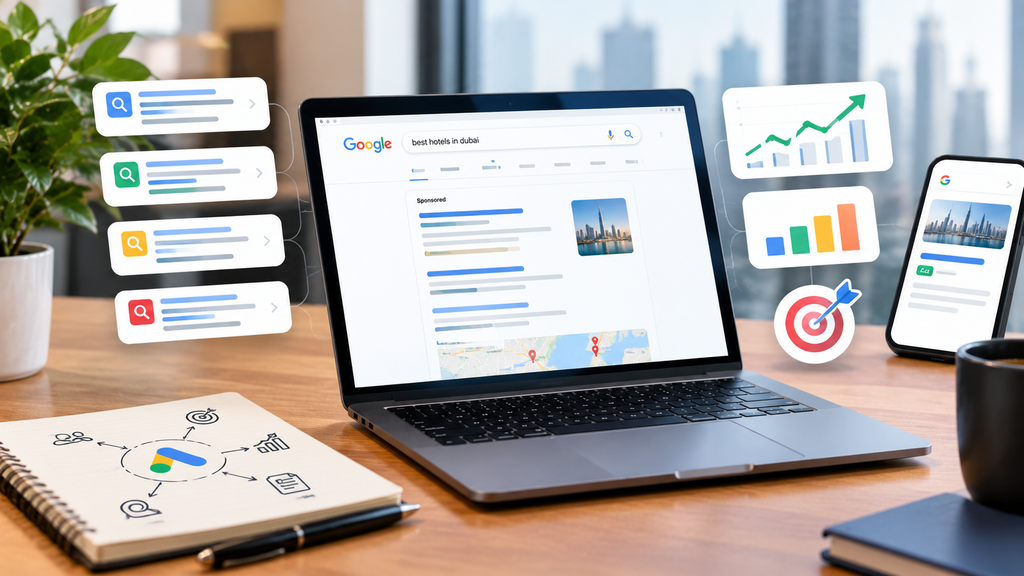
For service based businesses, particularly local ones, google local service ads sit in a different part of the results page entirely, often appearing above traditional paid search results, complete with a verification badge, a star rating and a direct call button built right into the listing.
That placement matters because local service ads carry trust signals a regular text ad simply can’t display. A background check badge, a strong review score and a phone number sitting right at the top of the page changes the math for someone at eleven at night comparing three plumbers because their kitchen just started flooding.
The catch is that local service ads mostly reward businesses already doing the basics well. Strong reviews, quick response times and proper licensing all feed directly into how often a business gets surfaced. There’s no way to simply outbid your way past a weak reputation here. The format amplifies whatever trust already exists. It doesn’t manufacture trust that isn’t there yet.
Which makes local service ads less of a standalone tactic and more of a reward a business earns after investing properly in its reputation somewhere else first.
Search captures demand that already exists. Social has to create it from nothing.
Nobody types a search query for a product they’ve never heard of. They discover it because a scroll stopped for a second longer than usual, a fifteen second video answered a question they didn’t know they had, or a friend’s comment casually mentioned it first, weeks before they’d ever thought to search the name directly.
A capable paid social media agency understands that on these platforms, the creative itself basically is the targeting. On feeds driven by engagement signals, an ad that feels native to the platform will almost always beat one that looks like a billboard someone awkwardly dropped into a scroll. The algorithm rewards content people actually want to keep watching, and quietly punishes content people skip within the first second, sometimes within the first frame.
That one fact changes the entire creative brief. Instead of asking for a polished product shot with a discount code stamped across it, a strong paid social strategy asks a much harder question: would someone want to watch this even if there were no ad label attached at all.
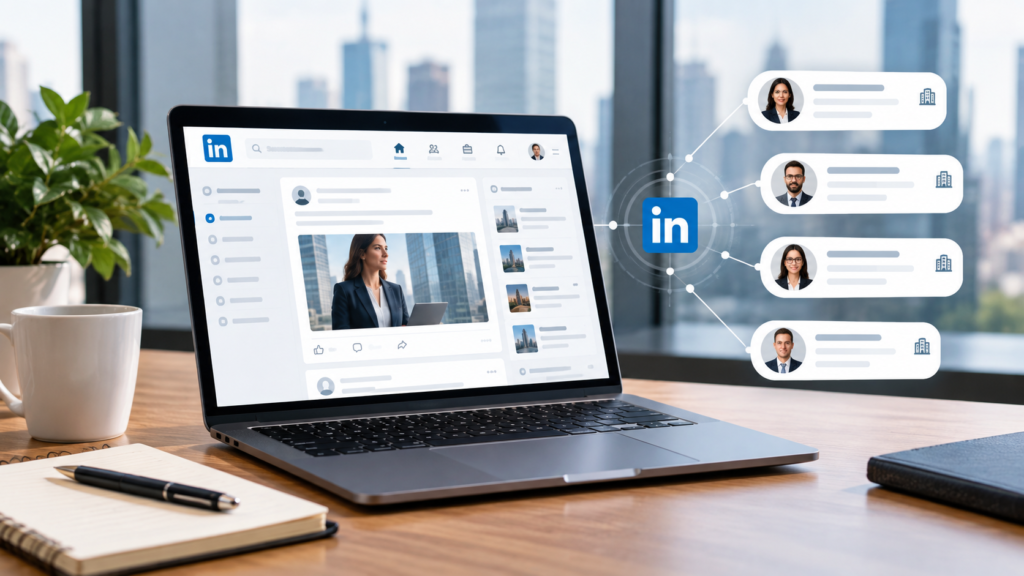
LinkedIn ads management plays by a completely different rulebook than consumer platforms like Instagram or TikTok.
The audience is smaller, the cost per click routinely runs higher, sometimes eight or ten dollars in competitive B2B niches, and the tolerance for anything that reads like a consumer ad sits at roughly zero. But the targeting precision, by job title, company size, industry and seniority, is unmatched anywhere else in paid social advertising.
That means LinkedIn campaigns have to earn their higher price tag through relevance rather than sheer reach. A generic B2B ad promising to “revolutionize your workflow” gets scrolled past instantly by the exact procurement manager it was supposedly built to reach. A specific, credible message aimed at a named role, a named problem and a named outcome earns the click that the same manager would otherwise ignore without a second thought.
Every agency in every pitch deck claims strong results. Very few can actually walk you through the thinking behind them without stalling halfway through the explanation.
The best advertising agency for social media share one habit that’s simple to describe and surprisingly rare to find in practice. They treat each campaign as a hypothesis rather than a guess dressed up in confident language. They can tell you exactly why a specific audience, creative angle or placement was chosen, and they can show precisely what changed once the actual data came back a week later.
A weaker agency hands you a report full of metrics. A stronger one hands you a decision and the reasoning behind it.
That single difference tends to be the clearest signal a business can use when comparing options, far more reliable than a portfolio of impressive looking screenshots with no context behind any of them.
This is the part of performance marketing that gets neglected longest, usually because launching a shiny new campaign feels a lot more exciting than staring at a heatmap for an afternoon.
A business can double its ad budget and watch traffic double right alongside it. If the website still converts at the same stubborn one percent it always has, that business has simply paid twice as much for the exact same number of sales it was already getting. Doubling spend fixes nothing about a website that’s quietly leaking visitors.
Conversion rate optimization is the discipline of figuring out exactly why visitors leave without buying, and fixing it methodically rather than by guesswork. That might mean a headline that doesn’t match what the ad promised thirty seconds earlier, a checkout with five unnecessary steps, a price that only appears at the very last screen, or simply a page that takes six seconds to load when half the visitors give up after three.
Good conversion rate optimization services don’t lean on gut feeling or copy whatever a competitor happens to be doing this month. They watch real user behavior through heatmaps and session recordings, run structured tests, and change one variable at a time so the results actually mean something afterward. Change five things on a page at once and conversion might improve, sure, but nobody will ever know which single change actually mattered, which means that improvement can’t be repeated anywhere else on the site.
Purchase funnel optimization looks at the entire journey rather than judging one page in isolation.
A shopper clicks an ad, lands on a product page, adds an item to the cart, and then simply vanishes. That drop off point is rarely random. It usually points at something specific: an unexpected shipping fee revealed too late, a login requirement nobody wants to bother with, a missing trust signal at the exact moment doubt crept in, or just one too many clicks standing between the customer and an actual payment.
Mapping the funnel stage by stage, from the very first click all the way through to the payment confirmation screen, reveals precisely where potential customers are being lost along the way. Fixing the single biggest leak in that funnel almost always produces more revenue than throwing another ten thousand visitors at the top of a funnel that leaks in exactly the same place it always has.
An ecommerce CRO agency deals with a noticeably different set of problems than a typical lead generation business chasing phone calls or form fills.
Cart abandonment, shipping cost surprises, sizing uncertainty and payment friction all show up specifically in retail, and each one usually needs its own particular fix rather than a generic conversion tip lifted from a blog post written for nobody in particular. A clothing brand losing sales to sizing doubt needs a completely different fix than a supplement brand losing sales to a shipping fee that only appears at the very last step of checkout.
Which is exactly why ecommerce conversion work benefits from specialists who’ve already solved these exact problems a dozen times before, rather than a generalist agency running the same five point checklist against every client on the books regardless of what they actually sell.
A single great campaign feels fantastic for about a week. A real ecommerce growth strategy is built to keep earning long after that first win has faded from anyone’s memory.
That means thinking about the entire customer lifecycle, not just the first sale. Acquisition cost only tells half the story if a customer buys once and disappears forever. A brand paying slightly more to acquire a customer but earning strong repeat purchases will usually out-earn a competitor with cheaper acquisition and no retention plan whatsoever behind it.
A genuine ecommerce growth strategy connects paid acquisition with email marketing, loyalty programs, product bundling and the experience after the sale, so the value of a single customer keeps compounding well past that first transaction. The goal isn’t the cheapest possible click available in the auction. It’s the highest lifetime value relative to whatever it actually costs to earn that customer in the first place.
Growth hacking techniques carry a slightly tarnished reputation, mostly because the term got stretched over the years to cover everything from clever product design to outright manipulation dressed up in a TED talk. Strip away the hype, and growth hacking is really just structured experimentation, run fast, with a bias toward learning quickly rather than waiting around for a flawless plan that never quite finishes.
A growth hacking mindset doesn’t spend three months testing five creative variations one at a time. It runs several small, cheap tests simultaneously, kills whatever’s clearly failing within days, and doubles down hard on whatever shows early signs of working before a competitor even notices the opportunity exists.
This works best sitting on top of everything already covered here, not instead of it. Growth hacking without solid campaign structure, decent creative and a website that actually converts is just noise generated a little faster than usual. Growth hacking layered on top of a system that already works is how a business finds its next real unlock before anyone else in the category has even started looking.
These three areas often get pitched as competing priorities fighting over the same slice of a marketing budget.
They make far more sense as connected stages of one continuous journey.
| Channel | Main Purpose | Typical Customer Behavior |
| Google Ads | Capturing existing demand | Actively searching, ready to compare |
| Paid Social | Creating new demand | Discovering a need they did not know they had |
| CRO and Funnel Work | Converting arriving traffic | Deciding whether to actually complete the purchase |
Google Ads captures the customer who already knows exactly what they want. Paid social introduces the brand to someone who hasn’t even started looking yet. Conversion rate optimization and purchase funnel optimization make sure that no matter which channel brought the traffic in, the website itself doesn’t lose that sale right at the finish line.
A business rarely has to pick only one of these and stick with it forever. A well built system uses paid media to build early awareness, search to capture the resulting demand once it forms weeks later, and conversion work to make sure neither channel’s traffic ever gets wasted once it actually lands on the site.
That connected approach consistently beats treating each channel as an isolated bet competing for the same limited pot of money.
This is the point where performance and paid growth stops being a list of tactics and starts behaving like an actual system.
Say a business is launching a new product line next month.
Paid social introduces the product to an audience that’s never heard of it before, using creative built specifically for how people actually scroll rather than a plain product shot with a price tag stapled onto it. Some of that audience clicks right away. Others simply remember the name and search for it later, which is exactly where Google Ads campaign management steps in to catch that demand the moment it turns into real intent, sometimes days after the first impression.
Meanwhile, the landing page catching all of this traffic has already been tested and refined through conversion rate optimization, so visitors aren’t lost to a confusing layout or a checkout process nobody wants to sit through at ten at night on their phone. Purchase funnel optimization has already found and fixed the exact step where past customers used to abandon their carts, usually right around the shipping cost reveal.
Growth hacking techniques run quietly underneath all of it, testing three ad angles at once, trying a new checkout incentive for a week, and cutting whatever underperforms within days instead of months.
The customer never experiences any of this as five separate campaigns run by five separate people.
They just see one brand that showed up at the right moment, made a compelling case, and made buying easy enough that hesitation never got a real chance to win.
That’s the value here. Not one ad that performed well for a week and got screenshotted for the pitch deck, but a system where every part of the journey is quietly pulling toward the one number the business actually cares about.
At Digiprism, we treat performance and paid growth as a connected engine rather than a stack of campaigns running side by side and hoping to overlap.
It starts with Research. Before a single ad goes live, we need to understand the real buyer, the real competition, and exactly where the current website or funnel is already losing people it should be keeping.
Then Structure. Campaigns get built around genuine search intent and specific audience segments, not one broad effort trying to be everything to everyone at once.
Once that foundation exists, we launch with a clear hypothesis attached to every creative, audience and landing page combination, so the results actually mean something once the data starts rolling in a week later.
Then we Optimize continuously, adjusting bids, refreshing creative before fatigue sets in, and patching funnel leaks the moment they show up rather than waiting for a monthly report to notice them three weeks too late.
From there, we Test relentlessly, running small experiments across ad copy, landing pages and offers, scaling whatever wins and cutting whatever doesn’t, quickly and without much sentimentality attached to either outcome.
Visibility and clicks aren’t the finish line, though.
Next comes Convert, making sure every single stage between the click and the sale is actually built to close, not just built to look polished in a screenshot.
And finally, Scale. Whatever’s proven to work gets more budget, more creative variations and more reach, deliberately, on purpose, rather than by accident because someone happened to notice a good week.
This never really finishes either. Auctions shift constantly. Platforms change their algorithms without so much as a warning email. Customer behavior moves. Competitors copy whatever worked last quarter the second they notice it. The system has to keep testing, deliberately, or it quietly goes stale without anyone noticing until the numbers slip.
One of the most common mistakes is judging a campaign purely on cost per click. A cheap click that never converts is worse than an expensive click that turns into a sale three days later. Chasing the lowest number on a dashboard, without ever connecting it back to actual revenue, is how budgets quietly get wasted while everyone in the room still thinks the campaign is doing just fine.
Another mistake is sending every bit of paid traffic to the homepage regardless of what the ad promised. A generic homepage can’t match the specific pitch made in a specific ad thirty seconds earlier, and that mismatch alone quietly kills conversion rates in a way no amount of extra ad spend can rescue.
Plenty of businesses also treat conversion rate optimization as a project with a finish date rather than an ongoing habit that never really stops. A landing page converting well a year ago isn’t guaranteed to convert well today, especially once competitors have caught up or customer expectations have quietly shifted underneath everyone.
Paid social gets misused just as often, usually by repurposing a thirty second television style ad straight into a social feed without adjusting for how differently people actually watch content there. What survives a TV spot rarely survives the first two seconds of a scroll.
And growth hacking gets treated as a shortcut far too often, when it only really works as an accelerant sitting on top of fundamentals that are already solid underneath it.
Rising ad costs paired with flat sales usually points to a conversion problem rather than a targeting problem. More traffic will not fix a website that can’t close the sale once people actually arrive on it.
A high click through rate paired with low sales almost always means the ad’s promise and the landing page’s reality don’t line up closely enough, leaving visitors confused right at the exact moment they were closest to buying.
A cart abandonment rate that never improves usually traces back to one specific friction point, a surprise cost, a confusing form, a slow loading page, rather than a dozen small unrelated issues stacked on top of each other.
An agency relationship that can never clearly explain the reasoning behind its own decisions is often a sign the campaigns are quietly running on autopilot rather than genuinely being managed by anyone paying close attention.
If we were starting from zero today, we wouldn’t open by picking a media budget and a platform and hoping for the best.
We’d start with the actual business itself.
What is the customer worth over their full lifetime, not just their first purchase alone. What does the sales cycle actually look like, in weeks or in months. Where does the current website or funnel lose the most people right now, today. What’s already been tried before, and what did the data from those earlier attempts actually say, honestly, rather than the version that got presented in a meeting.
Then comes channel selection. A business with a considered buying decision, something people research for weeks, might lean harder on Google Ads campaign management and LinkedIn ads management. A business selling something more visual or impulsive might get more out of a strong paid social media agency partnership instead.
Then comes the funnel audit. Every step from the first click to the final payment gets mapped out, and every point where people drop off gets flagged as a genuine priority, not filed away as an afterthought to fix “someday.”
Next, the testing calendar. Growth hacking techniques get scheduled on purpose, small experiments running constantly in the background, rather than left to happen only on the rare week someone remembers to try something new.
For Digiprism, performance and paid growth sits at the center of all of it, with every channel and every conversion fix reporting back to the same underlying number the business actually cares about at the end of the month.
That approach beats hoping one lucky campaign can somehow carry an entire quarter’s growth target on its own back.
Impressions look nice sitting in a report.
Click through rate feels satisfying for about five minutes before someone asks what it actually led to.
Neither one pays a single bill.
A stronger measurement model tracks the full path from spend to actual profit. For Google Ads and paid social, that means cost per acquisition, return on ad spend, and crucially, whether the customers being acquired are actually worth what it cost to acquire them once their full lifetime value gets factored in properly.
Conversion rate optimization and purchase funnel work, the metrics that matter are conversion rate by traffic source, cart abandonment rate, and how quickly a fix actually moves the needle once it goes live, not just whether it looks better in theory.
As for growth hacking specifically, the metric that matters most is velocity, how many tests actually got run in a given month, and how many of them produced a real, repeatable win rather than a one time fluke that never happened again the second time around.
The underlying principle stays the same across every single channel involved. Don’t measure how much activity happened. Measure what it actually changed in the business’s bank account by the end of the quarter.
Almost any business trying to grow predictably can benefit from a structured approach here, but the specific mix should shift depending on the business model in question.
A local service business probably needs google local service ads, tight Google Ads campaign management, and strong reputation signals feeding both at once. A search for a social media advertising agency near me often comes from exactly this kind of business, wanting someone who genuinely understands the local competitive landscape rather than a generic national approach copied wholesale from a completely different market three states away.
An ecommerce brand probably needs a serious ecommerce growth strategy paired with an ecommerce cro agency partnership, since retail conversion problems are specific enough to need specialist attention rather than generic advice pulled from a blog post.
A B2B company probably gets more value out of LinkedIn ads management and a longer, more considered funnel built around trust rather than urgency or a countdown timer.
The right mix starts with the customer, the sales cycle, and what the business can actually afford to test before it desperately needs to see a return.
Paid and organic growth get framed as competing philosophies far too often, one fast and expensive, the other slow and supposedly free.
That framing misses how well the two actually complement each other in practice. Paid campaigns can validate a message or an audience segment within days, long before an organic content strategy would ever gather enough data to draw the same conclusion on its own. Once that message is proven to convert, it can shape organic content, email campaigns and even product positioning well beyond the original ad that first proved it worked.
At the same time, strong organic content and a solid reputation make every paid dollar work noticeably harder. An ad pointing to a business with genuine social proof and a consistent brand presence will almost always convert better than the identical ad pointing to a business nobody’s ever heard of before.
So the smarter framing isn’t paid versus organic at all. It’s paid growth used to learn fast, with organic growth compounding whatever the paid spend already proved actually works.
Q1. What is performance and paid growth?
Performance and paid growth is the combined discipline of paid media, mainly Google Ads and paid social, alongside conversion rate optimization and structured experimentation, all aimed at producing measurable, repeatable business results rather than vague visibility nobody can act on later.
Q2. What makes google local service ads different from standard Google Ads?
Google local service ads sit above regular search ads for many local service categories and display trust signals like reviews and verification badges directly inside the ad, which means results depend heavily on a business’s existing reputation rather than bidding alone.
Q3. What is the real difference between conversion rate optimization and purchase funnel optimization?
Conversion rate optimization typically focuses on improving how a single page performs, while purchase funnel optimization looks at the entire path from first click to completed purchase, identifying exactly where potential customers get lost along the way.
Q4. Is growth hacking a replacement for traditional performance marketing?
No. Growth hacking techniques work best as an accelerant layered on top of solid Google Ads, paid social and conversion fundamentals, not as a substitute for building those fundamentals in the first place.
The biggest shift happening in paid marketing right now isn’t one platform quietly replacing another.
It’s that the entire buying journey has turned into one continuous loop rather than a straight line running from ad to sale. A customer might see a paid social ad, ignore it completely, search the brand a week later, get retargeted, abandon a cart at the shipping page, and finally convert weeks after that very first impression ever happened.
Which means treating Google Ads, paid social, CRO and growth hacking as separate departments is quietly leaving money on the table every single month. The businesses actually pulling ahead are the ones connecting every stage of that loop into a single system that learns from itself continuously, without waiting for a quarterly review to notice what changed.
Google Ads isn’t just bidding.
Conversion rate optimization isn’t a one time fix you complete and move on from.
Growth hacking isn’t a magic shortcut that skips the boring parts.
They’re different stages of the exact same buying decision, and the businesses treating them that way will consistently outspend and outperform the ones still running each one in isolation.
At Digiprism, we believe performance and paid growth only really works when every single channel is accountable to the same number, actual revenue, rather than its own isolated metric that looks good in a silo and means very little outside of it.
That means building Google Ads campaigns around real intent rather than keyword volume alone. It means treating paid social creative as content people would genuinely want to watch even without the ad label attached to it. It means testing conversion improvements methodically instead of guessing and hoping. And it means using growth hacking as a way to move faster on top of fundamentals that already work, not as a shortcut to skip building them in the first place.
We don’t believe bigger budgets automatically produce bigger results.
We don’t believe a single viral ad earns the right to call a strategy complete.
And we don’t believe conversion optimization is something a business does once, checks off a list, and quietly forgets about for the next two years.
The goal is simpler than any of that. Build a paid growth engine that earns more than it spends, consistently, month after month, and gets sharper every single cycle rather than staying frozen at whatever combination happened to work when it first launched.
Performance and paid growth isn’t a choice between Google Ads, paid social, conversion rate optimization or growth hacking. It’s about connecting all of them so every dollar spent moves a customer one step closer to a sale instead of getting lost somewhere in the middle of the journey.
Google Ads campaign management captures demand that already exists.
Paid social builds demand before a customer has even started searching.
Conversion rate optimization and purchase funnel optimization make sure that traffic actually turns into revenue rather than a bounce rate nobody wants to explain.
Growth hacking techniques keep the entire system improving faster than the competition can copy it.
Put together, they build something worth far more than any single campaign ever could on its own. A growth engine that earns its keep every single month, not just the good ones.
Your customers are already searching, scrolling and comparing right now, and every one of those moments is a chance to earn their business or quietly lose it to whoever showed up better prepared.
The opportunity is making sure your paid growth strategy captures that demand, builds new demand where it doesn’t exist yet, and converts the traffic already arriving instead of wasting it on a page that was never built to close.
Google Ads, paid social, LinkedIn advertising, conversion rate optimization and growth hacking, working as one connected system rather than five separate bets.
When these pieces move together, performance and paid growth stops being a monthly expense someone has to justify.
It becomes a system that pays for itself, and then keeps paying.
Ready to Build Your Performance and Paid Growth Engine?
Let’s Talk.
Turn ideas into growth with the right digital marketing strategy.
Let's Talk Growth